THethinkmedia@raipur
Money, Power, and the Battle for the Forest Force
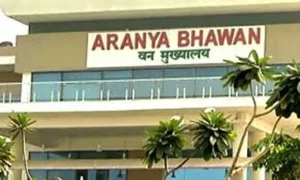 The old saying that “money may not be God, but it is no less than God” appears to echo loudly within Chhattisgarh’s bureaucratic circles these days. As the retirement of Principal Chief Conservator of Forests and Head of Forest Force V. Srinivas Rao approaches on May 30, speculation surrounding a possible extension of his tenure has intensified. Political and administrative corridors are abuzz with whispers that significant efforts—financial and otherwise—are underway to secure a continuation in office. Whether these rumors carry truth or merely reflect the cynical perception of the system is something only Rao himself can answer. Interestingly, this is not the first time questions have emerged around his rise. During the previous Congress government, Rao was elevated to the coveted position after superseding several senior officers, and even then murmurs about the influence of “money power” dominated bureaucratic discussions. That lingering perception has resurfaced once again. Yet the succession battle is no longer straightforward. PCCF (Wildlife) Arun Pandey has emerged as the strongest contender for the post. His credentials have gained additional weight after Prime Minister Narendra Modi publicly praised Chhattisgarh’s growing blackbuck population during an episode of Mann Ki Baat. Within government circles, it is believed that Chief Minister Vishnu Deo Sai is personally inclined toward Pandey’s appointment. The larger question, however, extends beyond a single bureaucratic posting. It touches the broader issue of whether merit and conservation achievements will prevail—or whether the perception that “money governs everything” will once again dominate public discourse.
The Chief Minister’s Secretariat: A Political Chessboard
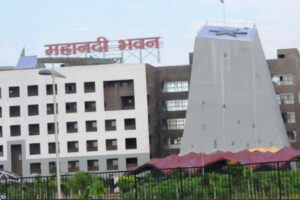 Politics and bureaucracy often resemble an elaborate game of chess, and nowhere is that more visible than inside the Chief Minister’s Secretariat. The recent transfer of 43 IAS officers has not merely been an administrative exercise—it has fundamentally altered the balance of influence within the power corridors. IAS officer Basavaraju, considered close to the so-called “Dayanand faction,” has been removed from influential assignments and shifted to comparatively less significant departments. Simultaneously, IAS officer Prabhat Malik from the 2005 batch has entered the Chief Minister’s Secretariat, signaling a deliberate restructuring of internal power equations. Before this, another officer perceived as close to the Chief Minister, Dr. Ravi Mittal, had already been deputed to the Prime Minister’s Office. Together, these appointments are being interpreted as a weakening of both the “Rahul Bhagat faction” and the “Dayanand camp” within the administrative ecosystem. The reshuffle reflects a deeper reality: bureaucratic appointments are rarely isolated administrative decisions. They are strategic moves designed to consolidate influence, shape decision-making, and establish loyalty networks. Like chess pieces repositioned across a board, officers are being moved not merely according to capability, but according to emerging political equations. At this stage, however, the endgame remains uncertain. In politics, as in chess, the winner is rarely identified in the opening moves.
Sambit Mishra and the Reality Check of Raipur Smart City
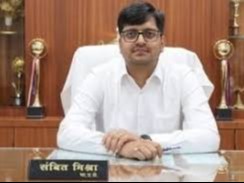 The transfer of IAS officer Sambit Mishra from Bijapur Collector to Commissioner of the Raipur Municipal Corporation and head of Smart City Raipur Limited marks an unusual administrative transition. Traditionally, officers move from municipal administration to district collector positions, not the reverse. This deviation alone indicates the importance the government now attaches to Raipur’s urban governance. Sambit Mishra now finds himself stepping into a system burdened by allegations of inefficiency, stalled development, and rampant corruption. During his probationary years, he was once shown the Raipur Smart City project as a shining model of urban transformation. Like many young officers, he reportedly saw only its glamour, grand plans, and modern façade. But the reality he encounters today is dramatically different. Over the years, accusations of kickbacks, contractor favoritism, political patronage, and manipulated project execution have increasingly clouded the Smart City mission. Infrastructure projects that were supposed to symbolize urban progress have instead become synonymous with delays and questionable financial practices. The idealism of “smart governance” appears to have been overtaken by entrenched bureaucratic and political interests. For Sambit Mishra, this posting may ultimately become more than a routine administrative assignment. It offers him an opportunity to distinguish between appearance and reality—to understand firsthand what was once showcased to him and what truly exists on the ground. The question before him is simple yet profound: What was seen then, and what has actually been found now?
Tightening the Reins Around Arun Sao’s Departments
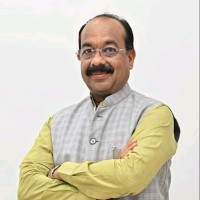 Among all ministers in the current government, Deputy Chief Minister Arun Sao has perhaps faced the greatest scrutiny regarding departmental functioning. Persistent complaints about sluggish infrastructure projects, administrative irregularities, and governance inefficiencies have placed his departments under intense observation. The recent appointments of senior bureaucrats indicate that the government may now be attempting to impose tighter administrative discipline. IAS officer Mukesh Bansal, known for his clean image and uncompromising work style, has been appointed Secretary of the Public Works Department. Similarly, 2005-batch officer R. Sangeetha has been posted to the Urban Administration Department and is widely regarded as an officer who adheres strictly to procedural norms. The message behind these appointments appears unmistakable. By deploying experienced and rule-bound officers into Arun Sao’s departments, the government seems intent on strengthening oversight mechanisms and minimizing political embarrassment arising from administrative failures. Whether this exercise results in genuine improvement or merely tighter bureaucratic control remains to be seen.
Mahadeo Kawre: A Retirement That May Not Be the End
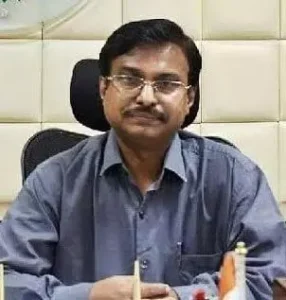 The transfer of IAS officer Mahadeo Kawre shortly before his retirement has sparked considerable speculation within bureaucratic circles. Such last-minute postings are rarely interpreted as routine administrative formalities. Kawre has long been regarded as a calm, experienced, and controversy-free officer. Unlike many bureaucrats who attract political friction, he maintained a relatively balanced image throughout his career. Because of this reputation, discussions have intensified that the government may consider offering him a contractual extension or advisory role after retirement. In administrative culture, post-retirement appointments often signify trust and political comfort. If such a move materializes in Kawre’s case, it would reinforce the perception that the government values not only efficiency but also stability and discretion in its senior officers.
The “Two-and-a-Half-Year” Shadow Returns
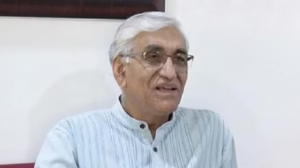 The political phrase “two-and-a-half years” continues to haunt Chhattisgarh Congress politics. Former Deputy Chief Minister T. S. Singh Deo, whose political journey during the previous Congress government became deeply entangled in the much-discussed rotational chief ministership controversy, has now expressed interest in becoming the State Congress President. The timing is politically significant. As the Vishnu Deo Sai government approaches its own two-and-a-half-year phase, Singh Deo’s renewed ambitions have revived memories of the unresolved power struggle within the Congress during the Bhupesh Baghel era. Simultaneously, another political equation is developing at the national level. If Congress General Secretary K. C. Venugopal eventually assumes a larger role in Kerala politics, there is speculation that former Chief Minister Bhupesh Baghel could receive greater responsibilities within the party’s central organization. Should that happen, Singh Deo’s role within the state unit could also undergo transformation. For now, however, Congress politics in Chhattisgarh remains suspended between ambition, uncertainty, and unfinished equations from the past.
Rumblings of a Cabinet and Organizational Reshuffle
 Following the BJP’s political successes in multiple states, discussions regarding a major reshuffle within both the Chhattisgarh government and the party organization have gained momentum. One of the most talked-about possibilities is the elevation of Deputy Chief Minister Vijay Sharma to a larger organizational role within the BJP’s central leadership. If such a development occurs, it could trigger significant changes within the state cabinet. At the same time, the party leadership is reportedly considering increasing women’s representation in government. Political speculation suggests that two female ministers could be inducted into the Vishnu Deo Sai cabinet during a future reshuffle. If these calculations materialize, as many as four ministerial positions may witness changes—some ministers exiting, others entering, and portfolios being redistributed. For now, these remain political whispers rather than official announcements. But in Chhattisgarh politics, whispers often become headlines sooner than expected.
editor.pioneerraipur@gmail.com